

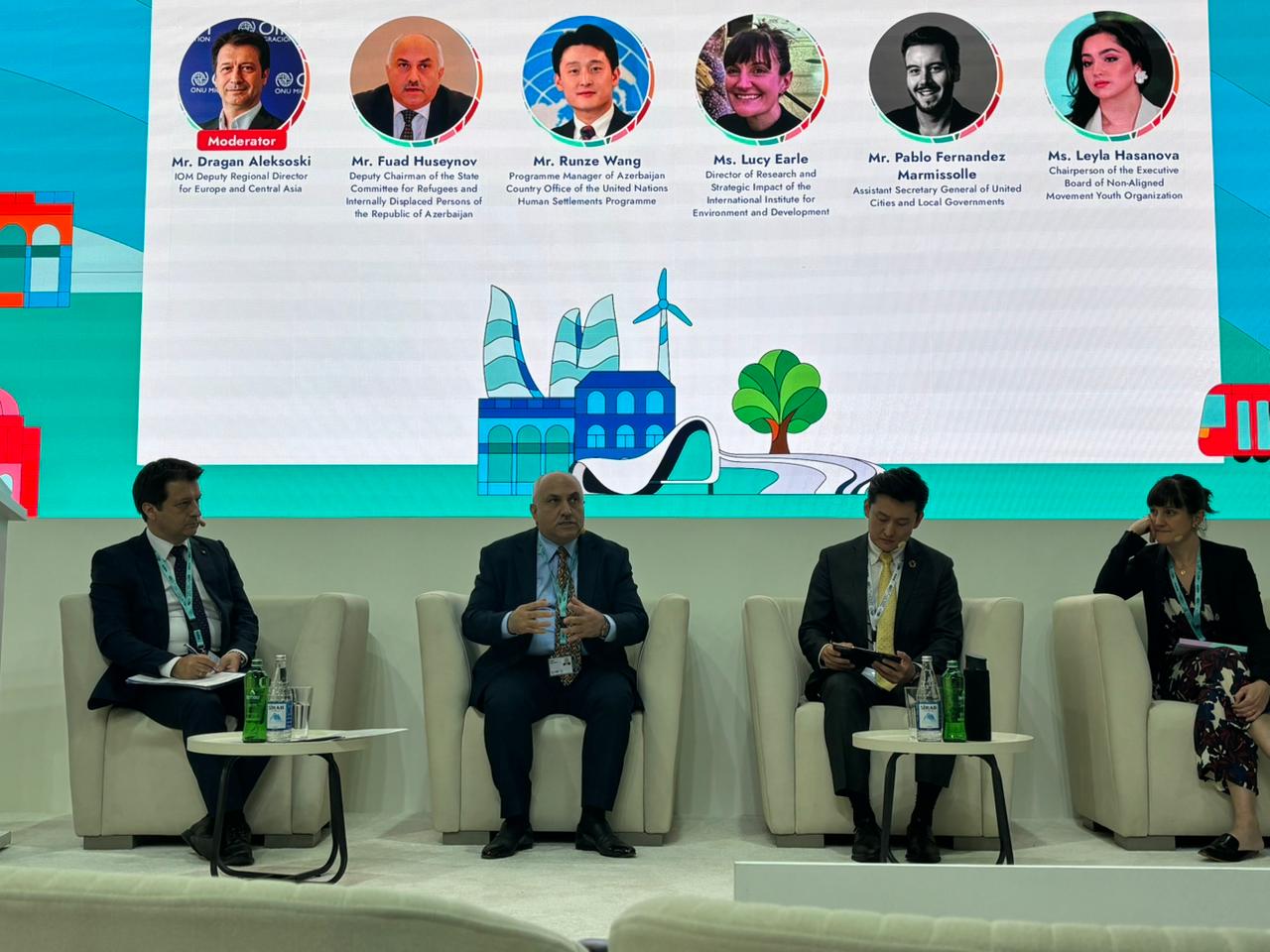
Azərbaycan Respublikası Qaçqınların və Məcburi Köçkünlərin İşləri üzrə Dövlət Komitəsi sədrinin müavini Fuad Hüseynov Ümumdünya Şəhərsalma Forumunun 13-cü sessiyası (WUF13) çərçivəsində Azərbaycan Respublikası Dövlət Miqrasiya Xidmətinin və Beynəlxalq Miqrasiya Təşkilatının birgə təşkilatçılığı ilə keçirilən “Miqrasiya və şəhərlər: təhlükəsiz, innovativ və dayanıqlı idarəetmə çərçivəsi” mövzusunda panel müzakirədə çıxış edib.
Sədr müavini çıxışında işğaldan azad edilmiş ərazilərə Böyük Qayıdışa dair I Dövlət Proqramının Tədbirlər Planına uyğun olaraq, Dövlət Komitəsinin əsas icraçısı olduğu işlər, xüsusi ilə məcburi köçkünlərin doğma yurdlarına qayıdışı ilə bağlı məsələlər haqqında ətraflı məlumat verib.
Nəzərə çatdırılıb ki, Prezident İlham Əliyev Qarabağda və Şərqi Zəngəzurda dayanıqlı məskunlaşmanın təmin edilməsi ilə bağlı işləri daim nəzarətdə saxlayır. Mütəmadi olaraq, doğma yurdlarına qayıdan sakinlərlə görüşür, onların rahat və təhlükəsiz yaşayışının təmin edilməsi üçün görülən işlərə yerində baxır, bu istiqamətdə tapşırıqlar verir. Birinci vitse-prezident Mehriban xanım Əliyeva işğaldan azad edilmiş ərazilərə səfərləri zamanı bölgənin yenidən qurulması, xüsusi ilə mədəni inkişafı və maddi-mədəni irs nümunələrinin bərpasına diqqət ayırır.
Qeyd edilib ki, ərazilərimizin işğaldan azad olunması məcburi köçkünlərin öz fundamental və ümumbəşəri hüquqlarının – təhlükəsiz, ləyaqətli və könüllü şəkildə öz doğma yurdlarına qayıtmaq hüququnun həyata keçirməsinə imkan yaratdı.
Böyük Qayıdış proqramının hazırlanması zamanı beynəlxalq təcrübə, müasir çağırışlar və azad edilmiş ərazilərin potensialı nəzərə alınıb. “Hamı üçün bərabər imkanlar”, “inklüziv yanaşma” və “heç kimin geridə qalmaması” prinsipləri rəhbər tutulub. Bu gün Azərbaycan Qarabağ və ətraf ərazilərin bərpası, yenidən qurulması və məcburi köçkünlərin mərhələli qayıdışını təmin etmək kimi mühüm bir missiyanı həyata keçirir. Bu prosesdə “ağıllı kəndlər” və “ağıllı şəhərlər”, “yaşıl iqtisadiyyat” və müasir şəhərsalma yanaşmaları xüsusi yer tutur, müasir memarlıq və şəhərsalma prinsipləri tətbiq edilir.
Sədr müavini qeyd edib ki, artıq 12 rayon və 11 şəhər daxil olmaqla 91 yaşayış məntəqəsi üzrə yeni məskunlaşma planları təsdiqlənib. Bu, dünya şəhərsalma və memarlıq təcrübəsində çox nadir və unikal nümunələrdən biridir.
Həyata keçirilən işlərin miqyasına baxmayaraq, minalanmış ərazilərin xəritələrinin tam şəkildə təqdim edilməməsinin mülki əhali üçün ciddi təhlükə olaraq qaldığı və Böyük Qayıdış prosesini ləngitdiyi vurğulanıb. Bildirilib ki, bütün bu çətinliklərə, mina təhlükəsi və genişmiqyaslı dağıntılara baxmayaraq, Azərbaycan dövləti bu prosesi qətiyyətlə davam etdirir.
Bundan əlavə, panel müzakirəsində miqrasiya və şəhərsalma proseslərinin qarşılıqlı təsiri, təhlükəsiz və inklüziv şəhər idarəetməsi, sosial dayanıqlılıq, mənzil təminatı və miqrasiya siyasətinin şəhər inkişafına inteqrasiyası məsələləri müzakirə olunub.
Panel interaktiv sual-cavab sessiyası və yekun müzakirələrlə davam edib.


